Walnut Wooden Cutting Board Mockup
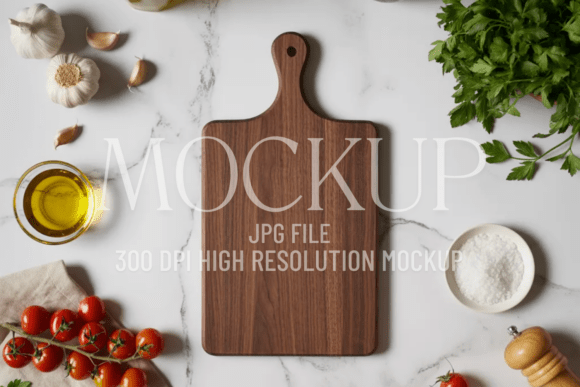
There’s a quiet shift happening in how creators present their work—not through louder visuals or flashier effects, but through thoughtful restraint. The Walnut Wooden Cutting Board Mockup is more than a design tool; it’s a response to a growing preference for authenticity, warmth, and intentionality in digital presentation. Unlike glossy, overproduced templates that compete with your content, this mockup steps back—offering a grounded, tactile backdrop that lets your branding, typography, or illustration speak clearly.
Why a Wooden Cutting Board—And Why Walnut?
Wood has long carried cultural weight: resilience, craft, natural variation, and quiet sophistication. Walnut, in particular, stands out for its rich grain patterns, subtle tonal shifts from deep chocolate to warm amber, and fine texture. It’s not sterile or synthetic—it feels *made*, not generated. That matters now more than ever. As audiences grow weary of hyper-polished, AI-saturated visuals, they’re gravitating toward cues of human care and material honesty. A walnut cutting board isn’t just background; it signals attention to detail, respect for process, and alignment with values like sustainability and craftsmanship.
This isn’t nostalgia—it’s strategic relevance. Consider how food bloggers style recipes, educators frame printable learning tools, or indie stationery brands launch new quote posters. In each case, the object being presented benefits from context that feels lived-in, not staged. The Walnut Wooden Cutting Board Mockup delivers exactly that: a neutral-yet-characterful surface where your design becomes the focal point—not the prop.
Minimalism That Works—Not Just Looks Good
“Minimal” is often mistaken for “empty.” But true minimalism—like what powers this Premium Minimal Mockup—is about precision, not absence. Every element serves purpose: the 300 DPI resolution ensures crisp output across print and digital use; the clean JPG file loads instantly and integrates smoothly into Canva, Photoshop, or Figma workflows; the absence of text, logos, or watermarks means zero friction when customizing. You’re not adapting to the mockup—you’re elevating your work *through* it.
This aligns with how modern creators actually work. Time is scarce. Tools must be intuitive, reliable, and fast. There’s no need to wrestle with layered PSD files or toggle visibility states when you just need to drop in a logo, adjust opacity, and export. The simplicity here isn’t decorative—it’s functional. It respects the creator’s rhythm, whether they’re finalizing a client pitch at 9 p.m. or prepping five Instagram posts before sunrise.
Real Use Cases—Beyond the Obvious
Yes, the Walnut Wooden Cutting Board Mockup shines for food-related graphics, recipe cards, or artisanal product shots. But its versatility runs deeper:
- Branding kits: Present logo variations or color palettes resting naturally on the board’s surface—no floating, no forced shadows. The wood grain adds subtle depth without distracting.
- Educational resources: A printable mindfulness prompt or classroom poster gains warmth and approachability when framed by organic texture—especially valuable for wellness coaches or homeschooling parents.
- Social media storytelling: Pair a short inspirational quote with the mockup for LinkedIn or Pinterest. The contrast between clean typography and raw wood creates visual tension that stops scrollers—not because it’s loud, but because it feels *considered*.
- E-commerce listings: For sellers offering digital downloads (wall art, planners, SVG files), this mockup bridges the gap between intangible product and tangible value—helping buyers imagine how the design might live in their own space.
What ties these together isn’t subject matter—it’s intent. Each use prioritizes clarity, emotional resonance, and contextual harmony over visual noise.
How This Fits Into Broader Creative Shifts
Creative professionals aren’t just choosing tools—they’re curating ecosystems. The rise of remote work, micro-businesses, and solo entrepreneurship means fewer dedicated designers on staff and more cross-functional roles. A marketer may also handle social visuals. An educator may design their own worksheets. A small-batch maker may shoot, edit, and brand their own product photos. In that reality, efficiency and aesthetic cohesion can’t be luxuries—they’re necessities.
The Walnut Wooden Cutting Board Mockup meets that need without compromise. It doesn’t ask users to learn new software or master complex layer masks. It works within existing habits while quietly raising the bar on output quality. That’s why it resonates across disciplines: it supports, rather than interrupts, real-world workflows.
Technologically, this reflects a broader pivot—from chasing novelty to valuing reliability. High-resolution JPGs may seem basic next to animated 3D mockups—but they load faster, share easier, and render consistently across devices and platforms. In an age of fragmented attention and variable bandwidth, dependable performance is a form of empathy.
Practical Tips for Getting the Most From This Mockup
You don’t need advanced skills to make this mockup work hard for you. Here are grounded, field-tested suggestions:
- Start with lighting direction: Notice how light falls across the walnut surface—soft highlights along the grain, gentle shadow beneath raised edges. When placing your design, mirror that logic. Avoid centering flat elements dead-on; slight rotation or offset adds realism.
- Respect the scale: This isn’t a tiny cheese board—it’s substantial. Keep typography legible at natural viewing distance. If showcasing a poster, ensure margins breathe; if presenting a logo, let negative space reinforce its shape.
- Layer thoughtfully: Since the file is a single high-res JPG, use blending modes (like Multiply or Overlay) in editing tools to integrate text or graphics seamlessly. Soften edges slightly where your design meets the wood grain for natural integration.
- Test across contexts: Preview how your final image reads on mobile versus desktop, in a carousel versus a standalone post. Does the warmth of the walnut still read? Does your message land quickly? Adjust contrast or sizing as needed—not to fix flaws in the mockup, but to honor how people actually consume content.
A Tool That Grows With You
Mockups aren’t static assets—they evolve alongside your practice. Early on, you might use the Walnut Wooden Cutting Board Mockup to polish a single Instagram post. Later, it could anchor your entire brand library—consistent across email headers, course landing pages, and printed workshop handouts. Its timelessness means it won’t feel dated next season, and its neutrality means it adapts as your voice matures.
That durability is rare. Many trendy mockups rely on fleeting aesthetics—geometric neon grids, vaporwave gradients, exaggerated shadows—that date quickly or clash with serious subject matter. Walnut wood doesn’t shout. It endures. And in a creative landscape where attention spans shrink and expectations rise, endurance is a quiet superpower.
Ultimately, the Walnut Wooden Cutting Board Mockup invites a different kind of intention—not just *what* you show, but *how* you invite people to see it. With its clean lines, honest texture, and thoughtful resolution, it helps turn routine presentations into moments of connection. Not through spectacle, but through sincerity.