St Patrick’s Day Faux Yarn Sublimation
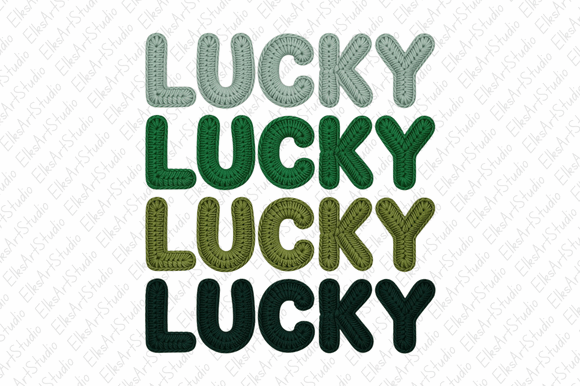
If you’re designing for St Patrick’s Day—whether for a small business launch, classroom activity, or personal craft project—you’ve likely faced the challenge of balancing authenticity with practicality. Real yarn textures add warmth and dimension, but photographing, editing, or vectorizing them is time-consuming. That’s where St Patrick’s Day Faux Yarn Sublimation steps in: a purpose-built digital asset that mimics the soft twist, subtle sheen, and layered depth of real wool or embroidery thread—without the production overhead.
Why “Faux” Isn’t a Compromise—It’s a Strategic Choice
Faux yarn sublimation isn’t about imitation for its own sake. It’s about delivering the visual language of handmade charm while meeting real-world constraints: tight deadlines, budget limits, and technical flexibility. Unlike photos of actual yarn (which often require complex masking or lighting correction), this design is created digitally from the ground up—with intentional texture variation, directional light cues, and organic irregularities that read as tactile at a glance. The result? A motif that feels handcrafted but behaves like a professional-grade graphic asset.
Seamless Integration Starts With the File Format
The fact that each St Patrick’s Day Faux Yarn Sublimation element arrives as a PNG file with transparent background isn’t just convenient—it solves specific workflow pain points. Designers using Canva, Adobe Photoshop, Affinity Designer, or even free tools like Photopea can drop it directly onto layered compositions without clipping masks or background removal. No guesswork, no artifacts, no reworking. That transparency also ensures clean scaling across formats: a single 3600 x 3600px file works equally well for a 4” sticker die-cut and a 24” wide T-shirt print—no resolution loss, no pixelation.
Real-World Use Cases That Save Time and Elevate Output
Consider a small-batch apparel brand launching a limited St Patrick’s Day collection. Instead of commissioning custom illustrations or sourcing physical yarn samples for mockups, they use the St Patrick’s Day Faux Yarn Sublimation PNG to build realistic product previews in under an hour—layered over shirt templates, adjusted for fabric drape, and exported in multiple colorways. The same file then becomes the basis for Instagram Story animations (with subtle opacity shifts) and printable hang tags—cutting down on asset creation by 70% compared to starting from scratch each time.
For educators preparing March lesson plans, the versatility shines differently. A third-grade teacher might import the PNG into Google Slides, reduce its opacity, and overlay it behind student-written poems about Irish folklore—creating instant visual cohesion without needing design training. Later, she prints the same file on cardstock, cuts it out by hand, and uses it as a tactile border for classroom bulletin boards. The high-resolution size ensures crisp detail even when enlarged on a projector or shrunk for a mini-booklet.
Customization That Respects Your Creative Process
“Easily resize and customize using your favorite software” isn’t marketing speak—it reflects how the asset was engineered. Because it’s raster-based but delivered at 3600px square (300 DPI at 12” x 12”), it retains fidelity through common transformations: non-uniform scaling for banner layouts, hue adjustments to match brand palettes (think sage green instead of kelly), or blending modes to simulate stitch shadows on dark backgrounds. Unlike vector files—which can oversimplify yarn’s natural fuzziness—this PNG preserves micro-textural nuance exactly where it matters most: along edges and intersections.
That said, it’s worth noting this is a single-design file—not a bundle or pattern repeat. If your project requires seamless tiling across large surfaces (e.g., wrapping paper or wall decals), you’ll need to manually duplicate and offset elements, or pair it with complementary borders. It’s optimized for focal-point applications: center motifs on tees, signature accents on greeting cards, or layered embellishments in digital scrapbooks—not infinite repeats.
Who Benefits Most—and Why It Fits Their Reality
Freelance designers working with seasonal clients appreciate how quickly they can pivot between projects: one afternoon, the St Patrick’s Day Faux Yarn Sublimation PNG anchors a bakery’s social media post; the next, it’s repurposed as a foil-stamped accent on a boutique’s invitation suite. There’s no licensing ambiguity—no need to verify model releases or material rights—as with stock photography.
Educators and nonprofit staff benefit from the zero-learning-curve accessibility. No plugins, no subscriptions—just drag, drop, adjust, and export. For after-school programs or community centers with limited tech access, it works flawlessly in browser-based editors and offline desktop apps alike.
Hobbyists and DIY creators find value in the tactile fidelity. When cutting vinyl for a shamrock-shaped mug wrap, the faux yarn’s defined edge helps align weeding tools precisely. When printing on textured watercolor paper for handmade cards, the 3600px resolution prevents halos around the design’s perimeter—a common issue with low-res downloads.
A Note on Contextual Fit
This isn’t a universal replacement for every St Patrick’s Day need. If your goal is photorealistic product photography for e-commerce, nothing substitutes for actual studio shots. If you’re developing a full branding system requiring dozens of coordinated patterns, a single faux yarn motif won’t carry that weight alone. But for projects where warmth, intentionality, and speed intersect—like limited-run merchandise, classroom visuals, or personalized gifts—the St Patrick’s Day Faux Yarn Sublimation delivers measurable efficiency gains without sacrificing aesthetic integrity.
Getting Started Is Intentionally Simple
You receive one clean, high-res PNG—no folders, no installers, no account logins. Open it in your editor, place it where needed, tweak contrast or saturation if your output medium demands it (e.g., slightly boosting brightness for dark garment prints), and export. That simplicity means less time troubleshooting compatibility and more time focusing on what matters: connecting with your audience, honoring the spirit of the holiday, and making something that feels both thoughtful and true.
Whether you’re screen-printing a dozen tees for a local parade committee or designing a digital newsletter for a cultural society, this asset bridges intention and execution—quietly, reliably, and with unmistakable St Patrick’s Day character.