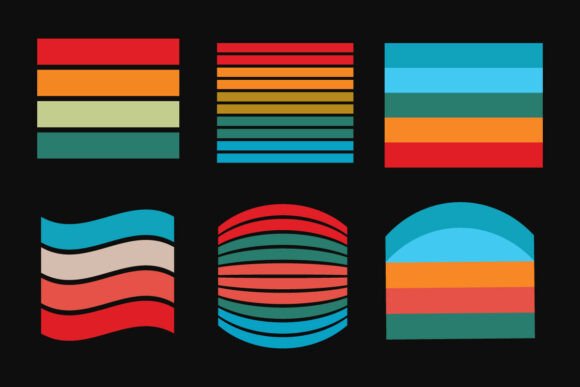
Vintage Beach Swimwear SVG and Summer SVG: Design Freedom for Creators Across Disciplines
For designers, educators, small-business owners, and hobbyists alike, Vintage Beach Swimwear SVG and Summer SVG collections represent more than nostalgic aesthetics—they’re functional, scalable assets that bridge digital creativity with tangible output. Unlike static image files, these vector-based resources retain crisp clarity at any size, enabling precise application across screen, print, and physical fabrication. Whether you’re laser-cutting a retro-inspired swimsuit stencil for a boutique display, layering sun-drenched motifs into an educational summer curriculum, or prepping files for heat-transfer vinyl on custom apparel, the versatility of SVG—and its companion formats—is foundational to modern digital making.
Why Vector Format Matters Beyond Aesthetics
At the core of every Vintage Beach Swimwear SVG file lies mathematical precision: paths defined by points, curves, and angles—not pixels. This means no quality loss when resizing from a 2-inch social media icon to a 6-foot trade-show banner. But vector fidelity alone doesn’t explain its dominance in creative workflows—it’s how SVG integrates seamlessly with tools used across professions.
Graphic designers use SVG natively in Adobe Illustrator and Affinity Designer for non-destructive editing—adjusting stroke weight, changing fill colors, or isolating individual elements like a 1950s polka-dot bikini top or a mid-century beach umbrella without degrading resolution. Educators import SVG files into Canva or Google Slides to build interactive summer-themed lesson visuals, then export clean PNGs for handouts. Meanwhile, makers using Cricut Design Space or Silhouette Studio rely on SVG for accurate cut lines—especially critical when working with delicate fabrics or layered vinyl decals.
Importantly, SVG isn’t isolated. The Welcome to your instant digital download package—delivered as a ZIP file folder—includes complementary formats: EPS (for legacy Adobe compatibility), PNG (for quick web use with transparent backgrounds), and DXF (for CAD-driven CNC machines and industrial plotters). This multi-format support ensures interoperability whether you're preparing files for a school maker lab, a local print shop, or a home cutting machine.
Small Business & Retail: From Concept to Customer Touchpoint
A swimwear boutique launching a limited “Retro Riviera” capsule collection might source a Vintage Beach Swimwear SVG set to design cohesive branding—from window decals (cut from vinyl using the DXF file) to embroidered tags (traced from the EPS outline) and Instagram story animations (exported as PNG sequences). Because each format preserves geometry and layer structure, the same artwork adapts effortlessly to different production methods—no re-tracing, no pixelation, no vendor miscommunication.
Similarly, a resort gift shop curating seasonal merchandise can embed Summer SVG elements—palm fronds, vintage sunglasses, striped beach towels—into reusable templates for tote bags, coasters, or ceramic mugs. With editable layers, swapping color palettes to match current inventory (e.g., coral-and-teal for June, navy-and-sand for September) takes minutes—not hours.
Education & Curriculum Development: Visual Literacy Meets Seasonal Engagement
In elementary classrooms, teachers use Summer SVG files not just as clipart—but as teaching tools. A PNG version of a retro surfboard becomes a drag-and-drop element in a digital storytelling activity; the SVG version allows students to explore shape composition in Tinkercad or Scratch, adjusting anchor points to understand how curves form. Middle-school art classes dissect layer organization in the EPS file to discuss visual hierarchy and period-specific design language—how exaggerated typography or simplified silhouettes reflect 1940s–60s graphic trends.
Higher education instructors in fashion history or material culture courses use the same Vintage Beach Swimwear SVG assets to compare construction techniques across eras—overlaying scanned archival patterns with vector outlines to highlight differences in seam placement, fabric drape simulation, or silhouette evolution. Because the files are editable and resolution-independent, they serve as stable reference points across presentations, publications, and student projects.
Hobbyists & Makers: Precision Without Professional Software
You don’t need a subscription to professional design software to benefit. Free tools like Inkscape open SVG and EPS files with full editability—including grouping, ungrouping, and path manipulation. Hobbyists crafting handmade soap molds, resin jewelry, or embroidered patches use the PNG files for tracing, while relying on the SVG’s vector paths for exact scaling in Glowforge or xTool laser interfaces. The DXF format, in particular, proves indispensable for woodworkers creating coastal-themed wall art—the clean line work translates directly to CNC routing without conversion artifacts.
Even photographers and content creators leverage these assets. A lifestyle blogger shooting summer flat lays might place a transparent PNG of a vintage beach towel over a neutral background, then adjust opacity and blending modes in Lightroom or Snapseed—not as decoration, but as intentional compositional framing. The authenticity of period-accurate graphics adds narrative depth without requiring custom illustration.
Key Considerations When Working With These Files
While flexibility is a strength, thoughtful usage prevents common pitfalls:
- Layer integrity matters: Many Vintage Beach Swimwear SVG sets include grouped layers—e.g., “bikini top,” “background waves,” “text banner.” Before exporting for cutting or printing, verify that strokes are converted to outlines (to avoid font substitution) and that overlapping elements aren’t unintentionally merged.
- Color mode awareness: SVG and EPS files preserve RGB definitions, but if sending to commercial printers, confirm whether CMYK conversion is needed—and whether the provider requires embedded profiles. PNG exports default to RGB; for physical products, soft-proofing against a calibrated monitor is advisable.
- Licensing scope: Most reputable Summer SVG bundles permit both personal and commercial use, but restrictions often apply to resale of *unmodified* digital files or mass production of items where the design is the sole value proposition (e.g., selling blank SVG files on Etsy). Always review the license included in the ZIP folder before scaling production.
- File hygiene: After downloading the ZIP file folder, unzip it immediately—many platforms compress nested folders, and skipping extraction may result in missing subdirectories containing alternate color variants or black-and-white line art versions. Name your working copies clearly (e.g., “vintage-swimwear-red-outline.svg”) to avoid confusion during iterative edits.
How Format Choice Shapes Output Quality
Understanding when to use which format prevents workflow friction:
- SVG: Best for web integration, responsive design, and vector editing. Use when you need transparency, animation capability, or scalability across devices.
- EPS: Ideal for print professionals using older RIP software or legacy Adobe workflows. Retains vector data and supports spot-color separation—critical for Pantone-matched merch.
- PNG: Optimal for quick insertion into presentations, social posts, or email newsletters. Choose 300 DPI versions for high-res print; 72 DPI suffices for web thumbnails.
- DXF: Required for CNC, laser, and plasma cutters. Ensure your machine’s software accepts 2D line work (not 3D meshes) and verify unit settings—some DXF files default to millimeters, others to inches.
Crucially, all four formats in the Welcome to your instant digital download package originate from the same master vector source. That consistency means color values, proportions, and stylistic intent remain intact—whether you’re aligning a palm tree motif across a t-shirt screen print (using EPS) and a website hero section (using SVG), or verifying cut accuracy on a vinyl plotter (DXF) against a digital mockup (PNG).
Emerging Trends Reinforcing Their Utility
Two macro trends are amplifying demand for versatile, era-specific design assets like Vintage Beach Swimwear SVG:
First, the rise of micro-manufacturing—think on-demand apparel, localized print shops, and hybrid retail models—relies heavily on plug-and-play digital files. A café launching branded beach towels doesn’t commission custom illustration; it selects from vetted Summer SVG libraries, adjusts colors to match its logo, and sends ready-to-cut files to a nearby textile printer—all within a single afternoon.
Second, pedagogical shifts toward project-based learning emphasize authentic tools and outputs. Students aren’t just coloring beach scenes—they’re designing packaging for fictional sunscreen brands using real industry formats, iterating based on peer feedback, and presenting final files in portfolio-ready PDFs generated from layered SVG sources. The presence of multiple export options mirrors real-world studio expectations, building technical fluency alongside creative judgment.
Ultimately, Vintage Beach Swimwear SVG and Summer SVG succeed not because they’re “trendy,” but because they’re rigorously functional. They respect users’ time, honor diverse technical entry points, and scale ethically—from classroom whiteboards to e-commerce storefronts. When you unzip that folder and see EPS, SVG, PNG, and DXF sitting side by side, you’re not looking at redundant file types—you’re seeing parallel pathways to execution, each optimized for a different kind of making, teaching, selling, or sharing.