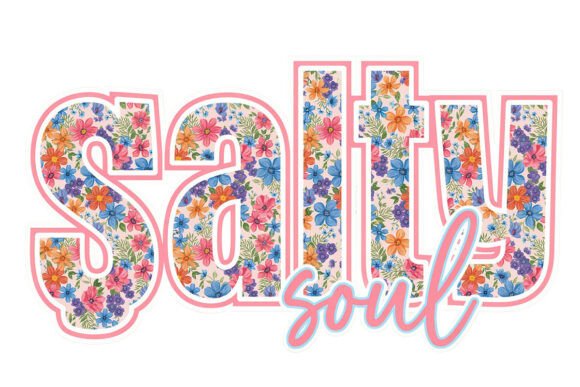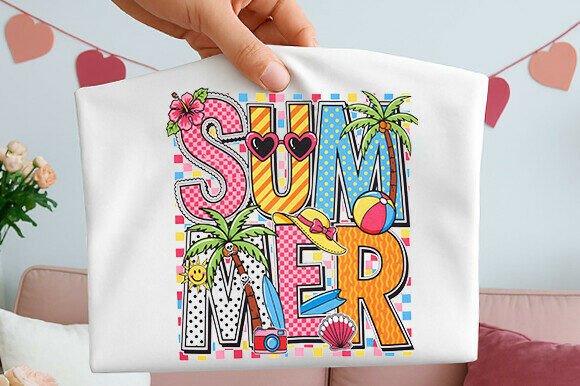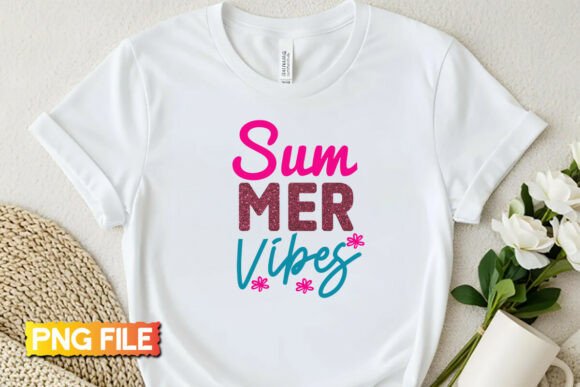
Sandy Toes Salty Kisses Summer Tee SVG
For designers, print-on-demand sellers, small business owners, and creative entrepreneurs, high-quality, ready-to-use vector assets are not just convenient—they’re workflow accelerators. The Sandy Toes Salty Kisses Summer Tee SVG is one such asset: a professionally sized, multi-format design file tailored for summer-themed apparel and merchandise. It’s more than a graphic—it’s a production-ready component that slots directly into your design, printing, or product development pipeline.
What This File Set Actually Delivers—and Why Format Variety Matters
The package includes five distinct file types—SVG, EPS, PNG (transparent), JPG, and a second SVG—each serving a specific role in different stages of your workflow. The 4500×5400px dimensions at 300 dpi ensure crisp output across garment prints, large-format signage, or digital mockups. Unlike low-res downloads or single-format bundles, this set anticipates real-world usage:
- SVG: Ideal for Cricut, Silhouette, and other cutting machines—scalable without quality loss, perfect for vinyl application on t-shirts, tote bags, or hats.
- EPS: Industry-standard vector format compatible with Adobe Illustrator, CorelDRAW, and professional RIP software—essential for screen printing prep and color separation.
- PNG (transparent): Ready for direct upload to platforms like Printful, Teespring, or Etsy—no background removal needed, works cleanly on dark and light garments alike.
- JPG: Useful for quick previews, client proofs, or social media promotion—high-resolution but raster-based, so avoid scaling beyond original size.
- Second SVG: Often includes layered or alternate versions—useful for testing layout variations or isolating elements (e.g., text vs. icon) during customization.
This isn’t over-engineering—it’s foresight. When you’re managing multiple SKUs, seasonal launches, or client revisions, having the right format on hand eliminates re-exporting, upscaling, or last-minute conversions that compromise quality or delay timelines.
Where It Fits in Your Creative or Business Workflow
Think of the Sandy Toes Salty Kisses Summer Tee SVG as a plug-in asset—not a standalone product, but a functional piece that gains value when integrated. Here’s how it functions across common scenarios:
Before Launch: Planning & Preparation
If you run a coastal-themed apparel brand or manage merch for a marina, boating club, or lakefront resort, this design supports early-stage planning. You can load the SVG into your design library alongside color palettes, font pairings, and garment templates. Its RGB color mode means it’s optimized for digital proofing and soft-proofing—but remember to convert to CMYK before sending final files to commercial screen printers if spot colors aren’t used.
During Production: Efficiency & Consistency
For POD sellers using platforms like Printify or Gelato, the transparent PNG eliminates background cleanup steps. Upload once, assign to multiple products (tees, hoodies, mugs), and maintain consistent sizing and placement across variants. If you’re batch-producing physical inventory, the EPS ensures clean vector paths for stencil cutting or embroidery digitizing—no pixelation, no manual tracing.
After Delivery: Adaptation & Extension
Once live, customer feedback or seasonal shifts may call for subtle tweaks—swapping “Salty Kisses” for “Sunset Skipper,” adjusting layout for youth sizes, or adding a nautical border. Because the SVG and EPS retain editable layers and anchor points, those changes take minutes—not hours. No need to start from scratch or rely on stock alternatives with mismatched style or licensing restrictions.
Compatibility Considerations You Can’t Skip
Not all files behave the same way across tools. Here’s what to verify before importing:
- Cutting machines: Confirm your firmware supports SVG import (Cricut Design Space v7+ does; older Silhouette Studio versions may require SVG-to-Studio conversion).
- Design software: EPS opens natively in Illustrator and Affinity Designer, but may render differently in free tools like Inkscape—test layer visibility and text outlines first.
- E-commerce platforms: Some marketplaces auto-resize uploads. Always check max file dimensions—this 4500×5400px size fits well within Etsy’s 10,000px limit but exceeds basic Shopify theme upload caps unless compressed.
- Color accuracy: RGB looks vibrant on screens, but printed results vary by fabric, ink type, and printer calibration. Soft-proof using your printer’s ICC profile before bulk runs.
Practical Tips for Long-Term Usability
File longevity depends less on the asset itself and more on how you organize and maintain it. Here’s how seasoned creators keep these resources effective over time:
- Name files descriptively: Instead of “SandyToes_1.svg”, use “SandyToes_SaltyKisses_SummerTee_SVG_v1_4500x5400px_RGB”. Include version numbers if you plan edits.
- Store originals separately: Keep unedited EPS/SVG files in a “Master Assets” folder. Save modified versions elsewhere to preserve source integrity.
- Document usage rights: This is a commercial-use license—verify terms before applying to trademarked events (e.g., “Key West Boat Parade”) or reselling as standalone digital files.
- Batch-test on substrates: Print a small run on cotton, tri-blend, and dark heather tees. Note how the design holds up across fabric textures and ink absorption—adjust halftone settings or underbase if needed.
- Archive ZIP structure: Extract files immediately upon download. Don’t rely on nested ZIPs inside ZIPs—some automation tools fail to parse deep archives reliably.
Who Benefits Most—and How They Use It Differently
A freelance designer building a client’s summer collection will treat this as a foundational element—layering it with custom typography or photo overlays in Photoshop. A marine educator selling fundraiser shirts might drop the transparent PNG straight into Canva, resize for youth S/M/L, and add a nonprofit logo in the corner—all in under 10 minutes. A small-batch screen printer uses the EPS to generate precise film positives, then references the JPG for client sign-off before burning plates.
What ties these use cases together isn’t the design’s theme—it’s its structural readiness. “Sandy Toes Salty Kisses” works because it’s built for action: legible at 8 inches wide on a hoodie chest, balanced enough for center-back placement, and stylized without sacrificing readability at smaller scales.
Final Integration Note: It’s Not Just About the File—It’s About Timing
Seasonal designs have narrow windows of relevance. Boating season peaks May–September in most Northern Hemisphere markets. That means the Sandy Toes Salty Kisses Summer Tee SVG delivers maximum ROI when deployed between March (mockup creation, platform listings, ad copy) and early June (inventory fulfillment, event booth prep). Delay until July? You’re competing with clearance pricing and fading search volume.
So treat it like a time-bound resource—not just another download. Add it to your Q2 content calendar. Assign it a deadline in your project management tool. Pair it with complementary assets (e.g., matching sticker SVGs or social media banner templates) to build cohesive campaigns—not isolated products.
When the files arrive in your inbox, extraction isn’t the finish line. It’s the first step in a repeatable, scalable process—one where preparation, format fluency, and intentional timing turn a single SVG into consistent revenue, brand recognition, and customer delight.